Cracked Roof Tile Repair Gone Deep - Here's What We Found
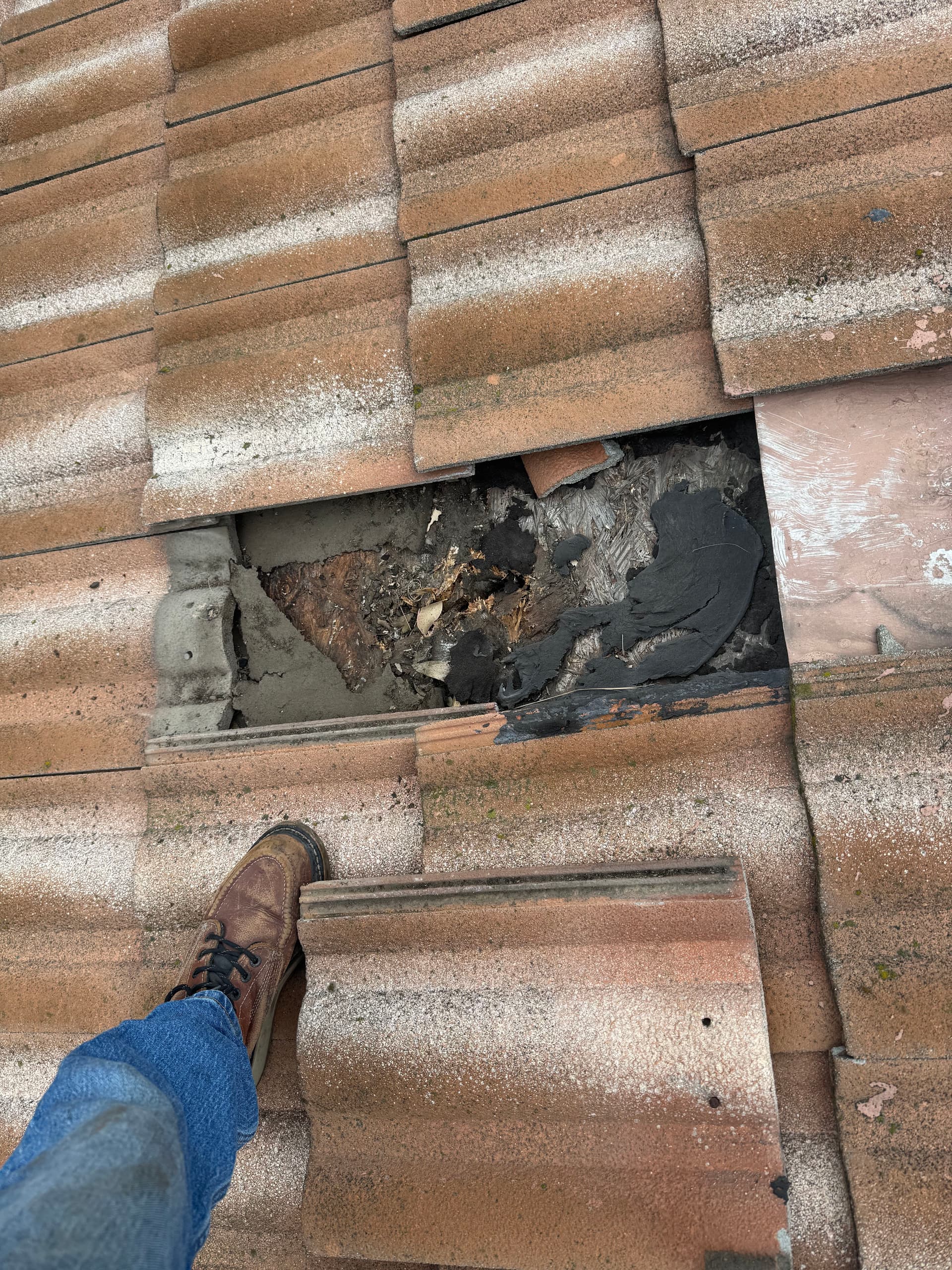
A single cracked tile doesn't look like much from the ground. But once we pulled it back on this job, here's what we were actually working with - rotted underlayment, deteriorated decking, and debris that had been sitting under there long enough to cause serious structural damage. That's the thing about tile roofs. The surface can look mostly fine while the layers underneath are quietly falling apart.
We do a lot of roof leak repair calls that start the same way. A homeowner notices a water stain on a ceiling, or spots a cracked tile during a walkthrough. By the time we get up there and start the tear-off, the damage runs deeper than expected. That's not a scare tactic - it's just what water does when it has a pathway and time on its side.
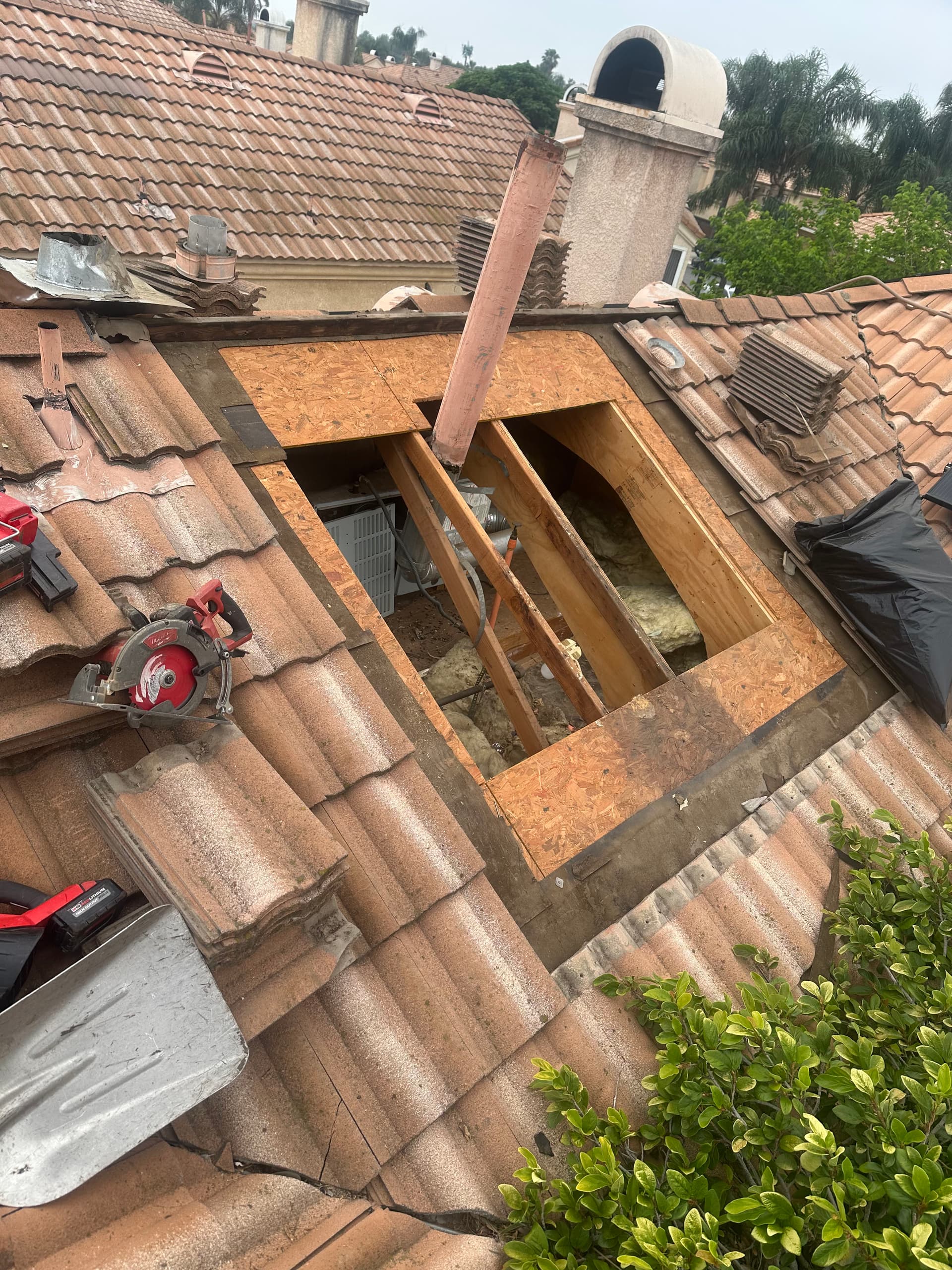
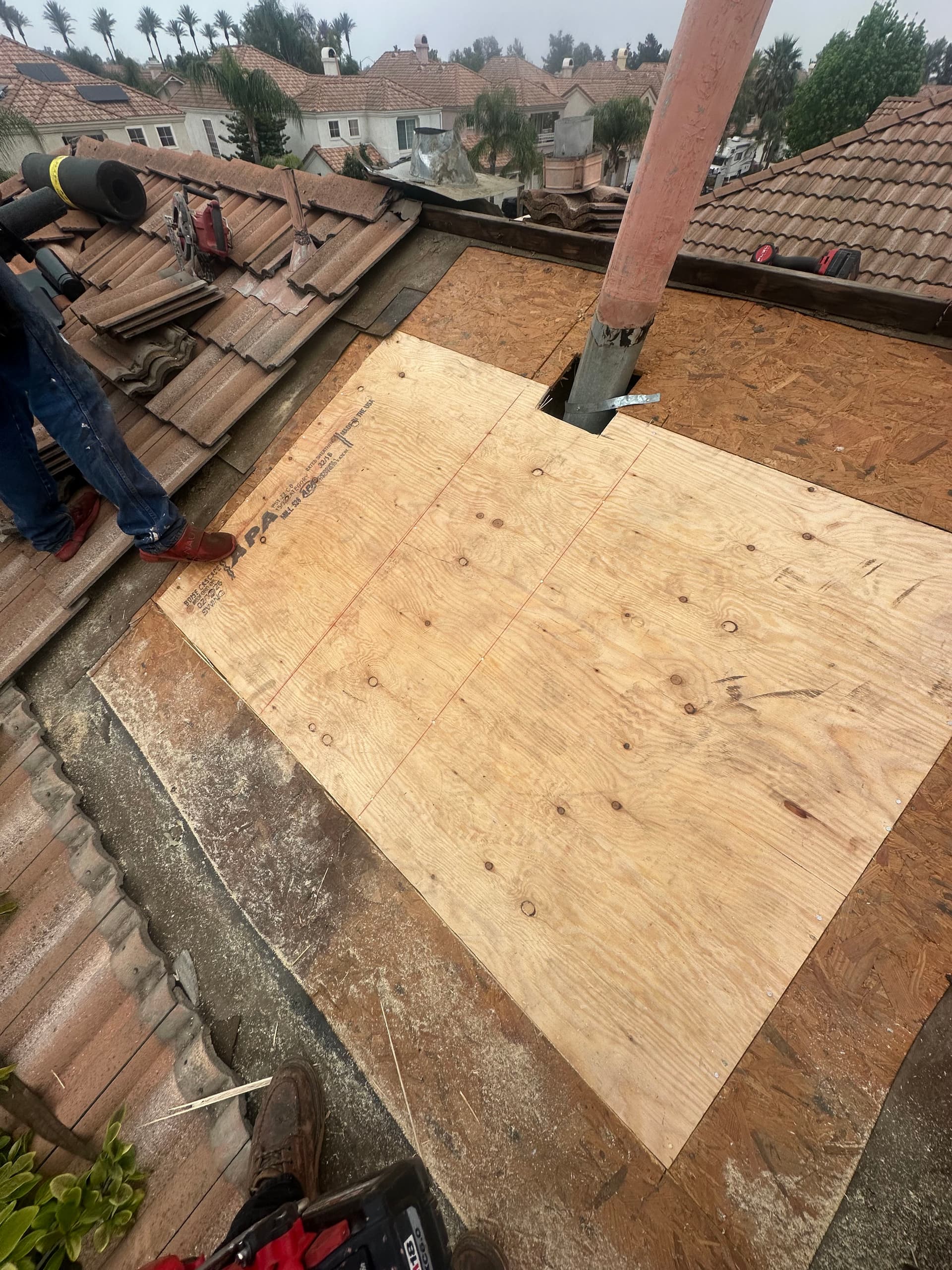
On this repair, we pulled the affected tiles, cut out the compromised decking sections, and replaced everything with fresh plywood sheathing before laying down new underlayment. You have to build back from a solid base. Patching over bad wood is a short-term fix that will cost more down the road.
Once the structural work was done and the new decking was secured, we reset the tiles to restore the roof properly. The goal is always to leave it better than we found it - not just functional, but structurally sound from the deck up. That's what a real roof repair looks like, not just a quick seal and call it done.
If you're seeing cracked or shifting tiles on your roof, don't wait to have it looked at. The repair you need today is almost always smaller and less expensive than the one you'll need in six months.